Uvaliu Manor (Cazanesti)
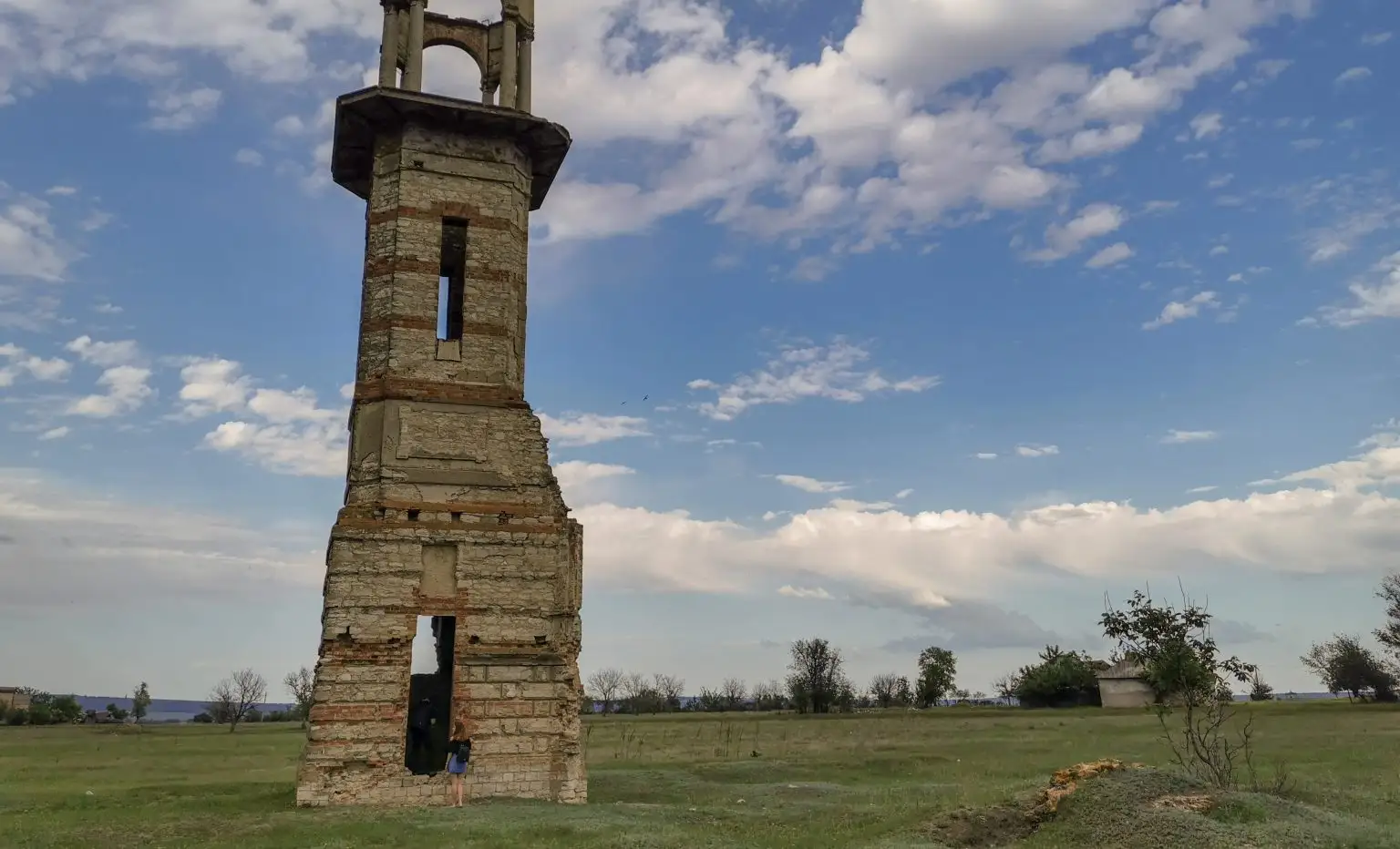
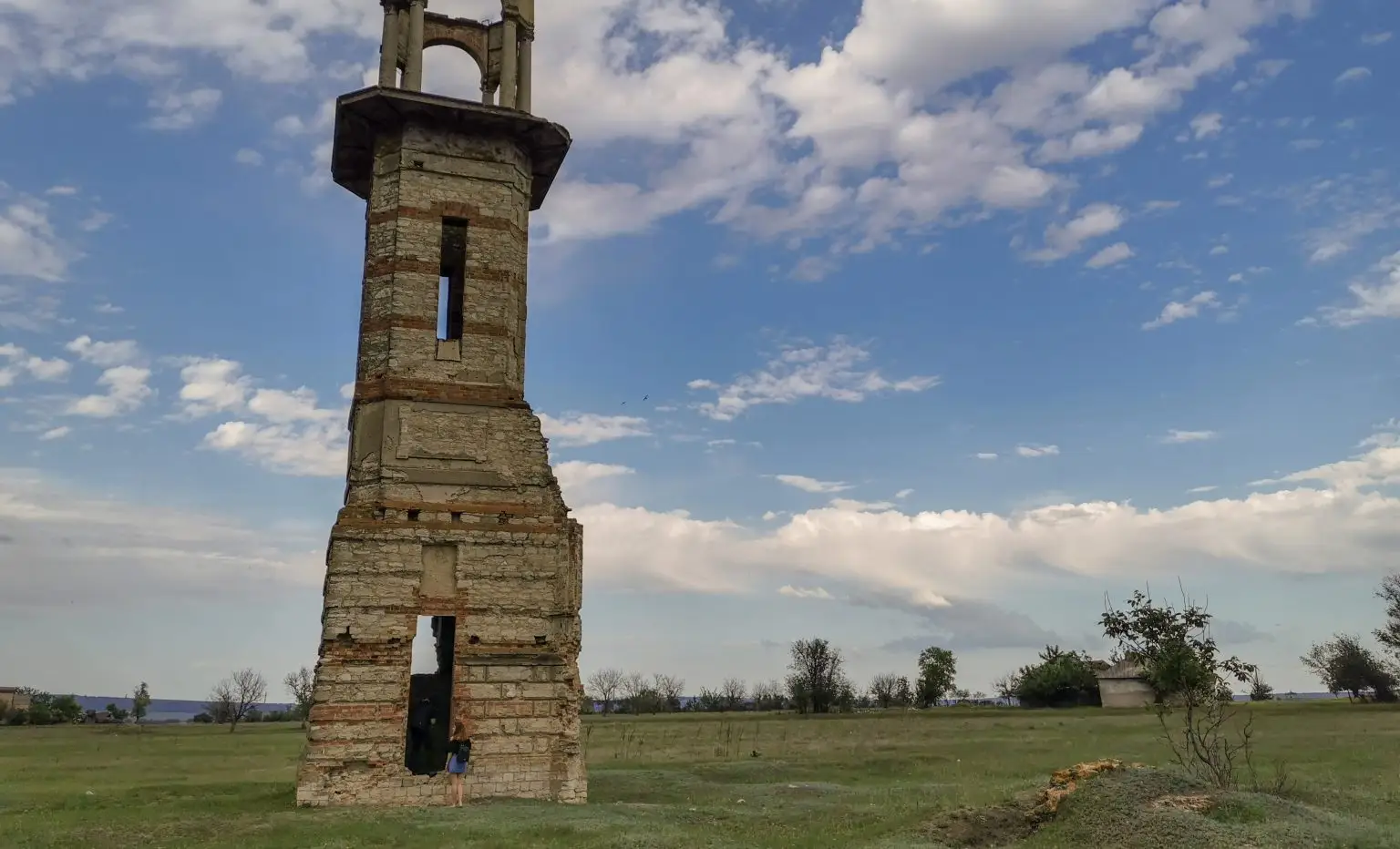
In the village of Cazanesti, the remains of a water and observation tower have survived. It was part of a manor palace that in the late 19th and early 20th centuries was one of the largest in the Russian Empire. In Cazanesti this tower is called the manor…
VIAR ID: tuznrk
Virtual tour
About this place
In the village of Cazanesti, the remains of a water and observation tower have survived. It was part of a manor palace – in the late 19th and early 20th centuries, one of the largest in the Russian Empire.
In Cazanesti this tower is called the boyar's manor or the boyar's palace. It is all that remains of an enormous palace built in the second half of the 19th century by the local boyar Stefan Uvaliu.
Little is known about the boyar himself, even though before the First World War he was a member of the State Duma of the Russian Empire. Apparently he was Bulgarian, and his real name was Stepan Uvalov. Still, the boyar himself interests us little. We mention him because he is the one who built the palace in Cazanesti.
Cazanesti – a village in Telenesti district, Republic of Moldova. It stands on the Reut river and is known as the site of Moldova's first hydroelectric station – a river dam. But very little is known about the manor itself. Part of the former palace grounds looks like an unevenly ploughed green field, with remnants of the foundation peeking through here and there – unusual, semicircular, made of red brick – and that, together with the tower, is all that recalls an enormous building of 99 rooms.
None of the locals could tell us anything definite about the palace's fate. Someone remembered that in the mid-1960s the villagers carted off the last bricks left on the site of the vanished building. And nothing more.
Perhaps the most detailed information about the palace's fate was given in the memoirs of Alexei Gaina, a physicist, astrophysicist, programmer and translator, author of numerous journalistic and scientific works, and elder brother of the composer and musician Valeri Gaina, the best Soviet rock guitarist of the 1980s. Both Gaina brothers come from Cazanesti.
In his memoirs Alexei Gaina paid attention to the palace, which he remembers from the late 1950s and early 1960s. But even in those years there were already three versions of what happened to Stefan Uvaliu's manor. In other words, the destruction of the palace had grown into a kind of legend. They were told by older Cazanesti residents who remembered the 1930s and 1940s, the war years.
So, according to the first version, in the summer of 1936 Stefan Uvaliu's heir sold the palace, which he no longer needed, to two Romanian engineers, who took the complex apart brick by brick. If this version is true, then why didn't they dismantle the observation tower, which still rises above Cazanesti like an unfinished church bell tower?
The second version – the palace was blown up right after the war, possibly because of an acute shortage of bricks needed for post-war reconstruction. And on the palace site they built a boarding school that still operates today.
And finally, the third version – the palace was bombed during the war, with both warring sides doing their bit. In 1941, a few dozen metres from the palace, towards today's Chisinau–Soroca highway, there was a Soviet military airfield, which German aircraft raided several times.
And in 1944 it was the Germans who, again not far from the palace, set up their own airfield, which was bombed heavily and often in August, during the Iasi–Chisinau operation. As Alexei Gaina writes, those who survived the air raids recalled that all the ground around the airfield was pitted with bomb craters.
Be that as it may, of the palace built on a boyar's scale only a fragment remains – a red-brick observation tower with a viewing platform in the form of an ancient portico. A pity.
Based on materials from the forum “My City Chisinau“
Updated:
On the map
Where this tour was filmed.
47.62379, 28.47264